How Your Brand Can Stay Relevant by Leveraging Online Filipino Culture
This article is written by Renzo Grijaldo.
Imagine the year 2009: YouTube plays in the background with Lady Gaga’s "Poker Face"; on another tab in your browser, a paused Y8.com dress-up game; and on another, a bedazzled feed from the social networking site pioneer, Friendster. Just a few years later, Facebook became popular. It grew larger as smartphones, video, and audio streaming became a thing.
Since then, Facebook has dominated social media, acquired other platforms, and become the Meta we know today. In the height of the pandemic, TikTok became popular. Its rise at the time was driven by bored, isolated users seeking an emotional escape.
In this blog, we will take you on a deep dive into Filipino online culture–from values and internet usage to how your brand can leverage this for marketing.
Digital Landscape: Overview of Filipino internet usage
As of 2025, there are 95.8 million social media users in the Philippines. Each Filipino spends approximately 33 hours and 50 minutes weekly on social media.
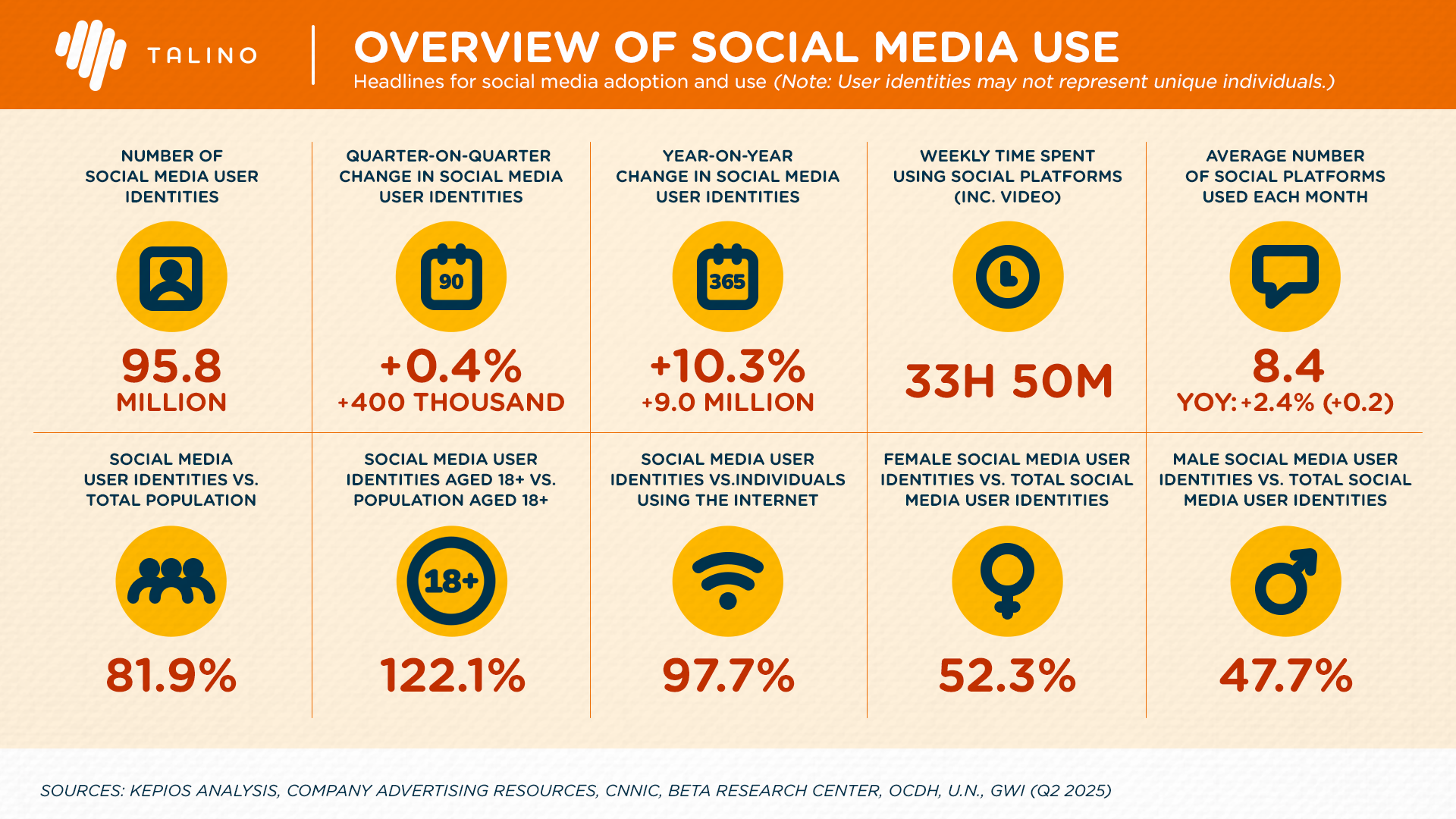
With this large number of social media users, brands have invested the majority of their advertising budgets into digital marketing. As of 2025, brands are spending $3.53 billion USD (+6.3% year-over-year growth) as they invest more in reaching Filipino consumers.
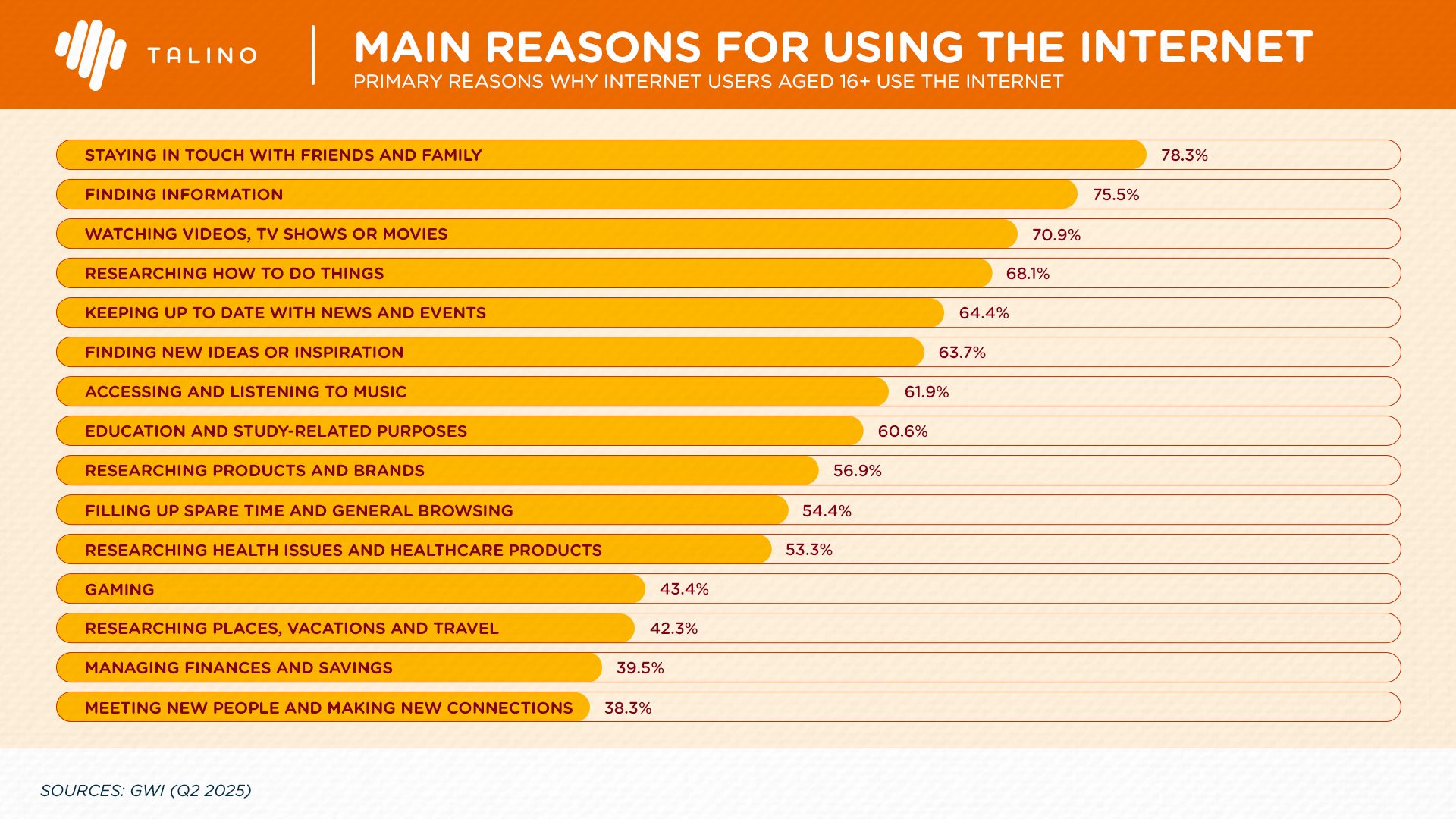
This 2025 data shows that the top 3 reasons Filipinos use the internet are mainly connecting with loved ones, information, and entertainment.
We’ve fully transitioned into a digital-first economy, and brands have redirected their efforts to reach their customers through their smartphones. Every journey is carefully curated, and tools are being used to listen and observe every user’s behavior, ensuring that every budget used for advertising leads to product purchase.
In fact, this year, it has been projected that the global contextual advertising market will reach more than $300 million. This makes much more sense, especially in the Philippines, with users who have weaker purchasing power in the majority, and every user values where their money is being spent.
In this narrative, we go back to how the Filipino culture works and how Filipinos are extremely loyal and fanatical when it comes to brands and key opinion leaders that they support.
Decoding Filipino online culture
According to Kadence International, Filipino consumers strongly favor brands that align with their personal values, family traditions, and daily realities. Research from Ipsos shows that 79% of local shoppers actively try to buy from brands they feel act responsibly, and a large majority prefer products that reflect community and national pride.
The power of “Bayanihan” and “Pakikisama”
These two are the strongest traits that brands should look at when building highly important campaigns, especially on soft-sell or branded lifestyle content. In a deeply connected audience, brands can thrive by leveraging online influencers, peer recommendations, and trends.
The “Budol” phenomenon
With the rise of e-commerce and e-commerce marketing, Filipinos were quickly able to evolve their traditional culture and interweave it into the digital experience. One of these is the “Budol” Culture.
Budol Culture in the Philippines refers to the phenomenon of making impulsive, emotion-driven purchases influenced by social media, viral trends, or peer recommendations. This originated from a local term for deception and now playfully describes being “convinced” to purchase due to the strong trusting influence of online communities and content creators.
Your brand can leverage viral, impulse-driven purchasing behaviors by partnering with relatable micro-influencers on TikTok and Facebook to showcase genuine, unscripted product experiences.
Memes as a major part of Filipino online culture
Filipinos are known to be emotional, nostalgic, and humorous. These key traits have set the Filipino audience apart on the global stage. We have our own version of memes, and it has become a culture in the internet space. Brands, on the other hand, were quick to recognize its importance and how they could leverage this for relevancy.
In hindsight, the Filipino meme culture has quickly evolved into a highly visual and deeply relational coping mechanism against daily hardships, political tension, and natural disasters.
With the power of the Filipino audience in penetrating a high social media presence, this culture thrived on a bilingual workplace, pop culture references, and hugot (feelings of longing and heartbreak).
Memes are an important aspect of every Filipino audience’s digital consumer journey. It is what keeps them entertained and is a way to build community and relieve the daily stressors of life.
That said, brands should pay closer attention to this. Memes might be less serious than they sound, but it has transformed many ordinary Filipino content creators into social media influencers that major brands trust today.
The Filipino meme culture is a form of contextual marketing, and brands must know the right timing, messaging, and strategy to integrate it properly with what they are trying to sell.
Contextual Marketing can be hit or miss
Some advertisers or marketers would rather spend enormous amounts of budget just to be in every touchpoint, because it takes a creative team to build an effective contextual marketing execution. Other than that, some brands strongly hold on to their branding and don’t want to go the contextual route, and that’s totally fine.
Since contextual marketing relies entirely on timing and environmental relevance, it can be challenging for brands to enter this route. However, when done right and with a calculated risk, it can become helpful and can drive higher conversion. The only wrong path to go is when the context gets misinterpreted, invasive, tone-deaf, or awkward.
Why Contextual Marketing succeeds
Higher Engagement and Relevancy - Consumers heavily rely on the internet for seeking help about anything they need at the time, so having ads that naturally complement the content being consumed easily creates a more natural and helpful experience.
Privacy Compliance - After third-party cookies have been phased out, contextual targeting has become an alternative to reach users without compromising customer privacy.
Enhanced User Experience - Contextual marketing creates a seamless experience within the user’s genuine interest rather than serving repetitive or disruptive ads.
The Pitfalls of Contextual Marketing
Algorithmic Misinterpretations - Algorithms can determine a keyword on a page, missing the underlying tone. For example, displaying an ad for alcoholic beverages in an article that talks about a vehicular accident because of drunk driving.
Disturbing Nature - Avoid getting your ads too specific, as it makes consumers feel like brands are eavesdropping on their conversations. This affects brand credibility and trust.
Lack of Deep Data Insights - Contextual marketing relies on timeliness, rather than tracking personal data. Ensure that your brand has dug enough insights and stories and has fully understood a specific contextual marketing execution to avoid scattershot targeting and missing the whole point.
Contextual marketing helps your brand become more relevant. Hopping on the right story and internet trend creates a good reputation and credibility,
How to leverage Filipino Online Culture for your brand
With an active user base, paying attention isn’t hard for brands nowadays, given the available insights and data tools across social media platforms. You can leverage your social listening and insight tools to understand what your users are looking for at every stage of their journey.
Here are some important key points that brands should prioritize:
1. Listen to your consumers’ pain points
Consumers prioritize product quality and customer service over lower prices. When you listen to their pain points, you help deliver the experience they value. Your brand should be present in the micromoments of consumers, especially when they need it the most. When you listen, you can establish a sense of urgency amongst users by showing that your product can address their concerns.
2. Showcase social proof
Filipinos trust what their community says. Every social media post and review highly impacts their purchasing behavior. By listening and addressing concerns, you gain trust and turn customers into active advocates for your brand.
Social proof is a combination of word-of-mouth and high social engagement. When users love their experience with your brand, it is assured that they will share it with their social media accounts, their friends, or leave a positive review.
3. Use data to track cultural trends and experiences
With a culture influenced by strong family ties, community values, and “budol culture” (the sharing of great finds), listening opens up an opportunity for brands to leverage stories, humor, and value. This is where timeliness and the usage of your social listening tools come in. Ensure that you monitor what trends are relevant for your brand and how you can integrate them into your experiences.
4. Prioritize mobile-first content
As heavy social media users, they expect brands to be highly accessible and responsive on their preferred digital channels. Users get excited whenever brands hop on trends and release their own take on a relevant social event. By prioritizing mobile-first content, you create a seamless user experience, whatever your sales objectives are.
These key aspects help in elevating your brand amongst other competitors. By being able to be in every step of the customer journey, your brand stays recognizable, relevant, and top-of-mind.
The winning combination for staying relevant as a brand
In a challenging market where each brand competes for attention, it is important to know where to invest your digital marketing efforts, especially when it comes to knowing your audiences.
Filipinos stay loyal to a brand that walks with them in their daily lives. To win the hearts of every Filipino user, remember to be consistent and innovative as a brand. According to Entrepreneur, enduring brands maintain an unwavering commitment to their foundational identity while continuously adapting their products, messaging, and customer experiences to meet shifting market realities.
Remember to become fluent in culture, rather than blindly chasing every short-term trend. Your brand should participate in moments and conversations that feel intentional and genuine.
Stay Relevant as a brand with Tali
We know it takes a team to build a legacy. Here at Tali, we know the brands we work with to the core – their values, identity, and especially their audience. Our team is equipped with the tools and skills to turn your stories into highly converting digital marketing executions.